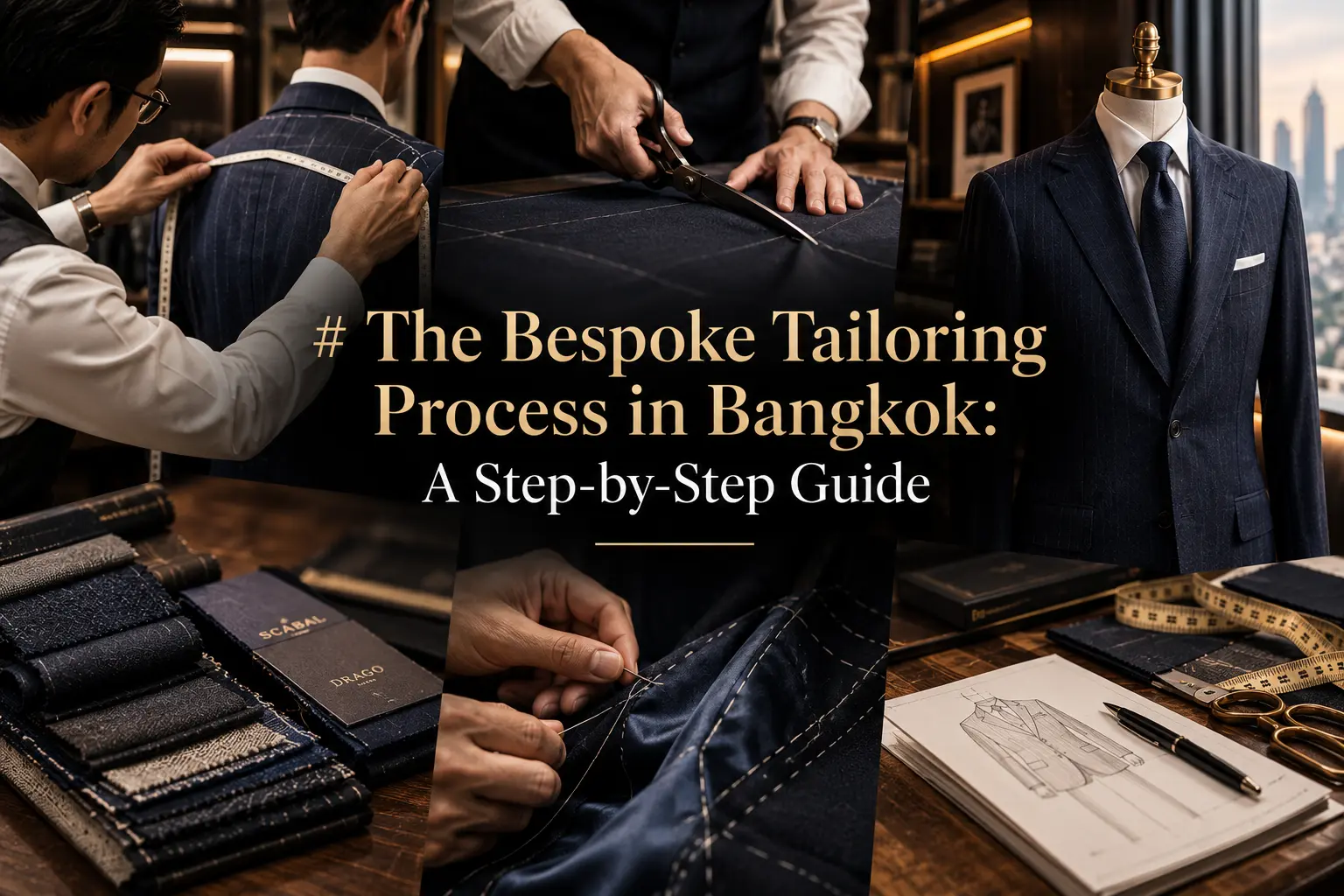
The Bespoke Tailoring Process in Bangkok: A Step-by-Step Guide
Bangkok has one of the world's busiest bespoke tailoring scenes, and also some of its biggest gaps in quality. The difference between a suit that fits for a decade and one that disappoints usually isn't the fabric or the price. It's the process. A true bespoke garment is drafted, cut and fitted around your body over several stages, and every shortcut shows.
This guide walks you through each step of the bespoke tailoring process in Bangkok, from the first consultation to final collection. It covers how long each stage takes, how to prepare and the warning signs to look for. Once you know what a proper process looks like, you can use our guide to the 10 best tailors in Bangkok to choose who makes your suit.
The Process at a Glance
- 1ConsultationHow and where you'll wear it
- 2Fabric selectionCloth, mill and composition
- 3Measurements & posture20+ measurements
- 4Pattern & cuttingYour own paper pattern
-
↻ Fitting loop: pattern adjusted after each fitting
- 5Baste fittingRough, basted version
- 6Forward fittingSleeves and collar set
- 7FinishingButtonholes, lining, handwork
- 8CollectionTry on, then pay the balance
The fittings are what make a garment bespoke. Between the baste and forward fittings, the tailor adjusts the pattern as many times as your body needs.
The Bespoke Tailoring Process, Step by Step
1. Consultation
The tailor asks how and where you'll wear the garment, what you like and dislike in your current clothes, and which style details you want. Expect questions about lapel shape, button stance, trouser rise and how structured or soft you want the jacket. A good consultation is a conversation, not a sales pitch.
2. Fabric Selection
You choose the cloth from swatch books or bolts. In Bangkok's climate, lighter tropical wools, wool-linen blends, linen and cotton make the most sense for everyday wear. Ask for the mill name and the fabric composition. A reputable tailor will tell you exactly what you're buying.
3. Measurements and Posture
A thorough tailor takes 20 or more measurements and also notes your posture: shoulder slope, whether one shoulder sits lower, how you stand and how you carry your arms. These observations matter as much as the numbers, because they're what a standard pattern can't capture.
4. Pattern Drafting and Cutting
Your measurements become a personal paper pattern drafted for your body alone. The cloth is cut from that pattern, usually by hand. Ask whether the tailor keeps the pattern on file, as it makes every future order faster and more consistent. This is also when the jacket's internal construction is decided: half canvas, full canvas or fused.
5. Baste Fitting
The first fitting is a rough version of the garment, loosely held together with temporary stitching (basting). The tailor checks balance, shoulder line, chest, waist and length, and marks changes directly on the cloth with chalk and pins. Don't be surprised if it looks unfinished. That's the point.
6. Forward Fitting
After the pattern is adjusted, you try a more complete version with sleeves set and collar attached. The tailor refines details such as sleeve pitch, trouser break and how the lapel rolls. Complex garments or difficult figures may need a third fitting.
7. Finishing
Once the fit is approved, the garment is finished: buttonholes, linings, pressing and handwork such as pick stitching. Quality finishing is where a well-made garment separates itself from a fast one.
8. Collection
Try the finished garment on before you pay the balance. Sit, raise your arms and walk around. A good tailor will make any last small adjustments on the spot or within a day or two.
How Long Does Bespoke Tailoring Take in Bangkok?
Timelines vary by tailor, garment and construction. These ranges are typical for quality Bangkok tailors, not rush shops.
| Garment | Typical fittings | Typical timeline |
|---|---|---|
| Shirt | 1 | A few days to a week |
| Trousers | 1–2 | About a week |
| Half-canvas suit | 2 | One to two weeks |
| Full-canvas suit | 2–3 | One to three weeks |
| Tuxedo or wedding suit | 2–3 | Two weeks or more; book a month ahead |
| Dress or gown | 2–3 | One to several weeks, depending on detail |
Visiting Bangkok on a short trip?
Book your consultation on day one or two. That leaves time for at least one fitting before you fly. Many established tailors keep your pattern on file and can ship finished garments or reorders abroad.
How to Prepare for Your First Appointment
- Bring references. Photos of styles you like, or a garment that already fits you well.
- Wear the right shoes and shirt. They affect trouser length and sleeve length.
- Know your occasions. Office, travel, wedding or black tie each call for different cloth and construction.
- Set a budget range. It narrows fabric choices quickly and avoids upselling.
- Block out time for fittings. Each fitting takes 20–45 minutes. Don't rush them.
Questions to ask any tailor
- Will my garment be cut from a personal pattern, and will you keep it on file?
- How many fittings are included?
- Is the jacket half canvas, full canvas or fused?
- Where is the work done: in-house or sent out?
- Which mill is this fabric from, and what is its composition?
- What happens if something doesn't fit after collection?
Red Flags in the Process
If a tailor skips or rushes these steps, the result will show it.
- No fitting at all. A finished suit in 24 hours with no fitting is made-to-measure at best, not bespoke.
- A tape measure and nothing else. No questions about posture, use or style means a standard block pattern.
- Package deals. "Two suits, three shirts and a tie" bundles almost always cut corners on cloth and construction.
- Vague fabric answers. If the tailor can't name the mill or composition, assume the worst.
- Pressure to pay everything upfront. A deposit is normal; the full price before any fitting is not.
- Touts and commission drivers. A good tailor doesn't need someone on the street to bring in customers.
Choosing the Right Tailor
The process is the best test of a tailor. A personal pattern, real fittings, clear answers about fabric and construction, and no pressure are the signs of a shop that will make something worth keeping.
Ready to shortlist? Compare prices, specialties and locations in our guide to the 10 best tailors in Bangkok, then book a consultation with the one that fits your style and schedule.